DogWell Health
Canine Wellness
Investigation · Mobility & Aging

Is Your Dog Secretly in Pain? Most Owners Miss These 5 Signs

By the time you finally see the limp, your dog has been hiding the pain from you for months.

Melissa Burke, Veterinarian - Nutritional Specialist
Reviewed Thoroughly by Melissa Burke, Veterinarian - Nutritional Specialist
June 2026·6 min read
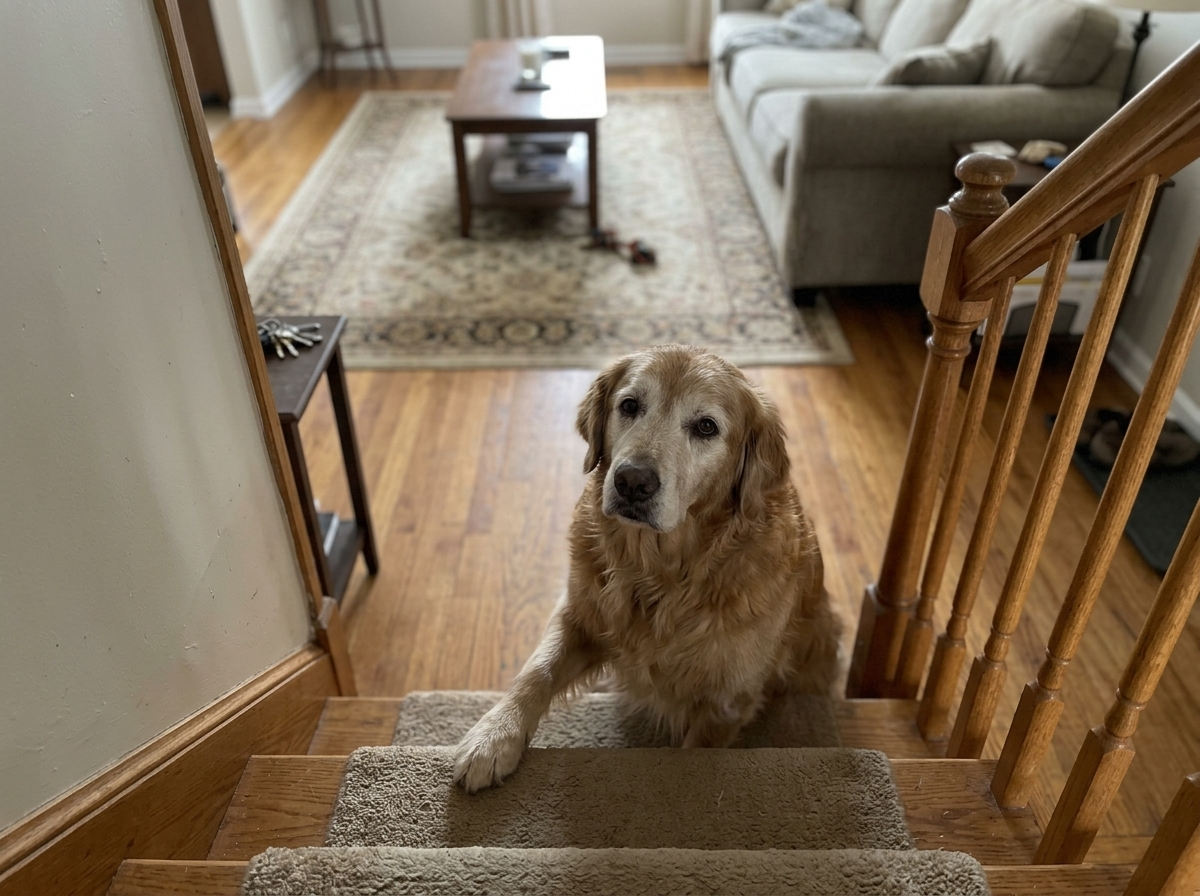
A golden retriever hesitating at the bottom of the stairs
He still wants to follow me up, but his body just won't let him.  Most owners miss what that hesitation really means. Here's what to look for before it's too late.

If your dog has started slowing down, there's something you need to know before you write it off as "just getting old." Because here's the truth most pet parents don't realize until it's late: dogs are masters at hiding pain. It's instinct. In the wild, the animal that limps is the animal that gets left behind — so your dog will mask discomfort for as long as he possibly can, right up until he physically can't anymore.

Which means by the time you actually see the limp, the problem has usually been building for months.

"They're great at hiding pain. I didn't realize how bad it had gotten until she just stopped wanting to jump up beside me on the couch."

— Verified owner review

That's the heartbreaking part. The dog isn't fine and then suddenly hurting. The dog has been quietly hurting, and only now is it breaking through.

The Deterioration Timeline

What the slow decline really looks like

Most owners imagine joint problems as a sudden event. They aren't. They creep.

At first

A little stiffness when he gets up in the morning that walks off in a minute. You barely register it.

A FEW MONTHS LATER

He pauses at the bottom of the stairs. Just a beat. Like he's doing the math on whether it's worth it.

BY THIS YEAR

He's flat the rest of the evening after walks. A slight limp that's gone by morning, so you tell yourself it's nothing.

NOW

The limp stops going away by morning. He starts favoring one side, hesitating before the couch.

IF YOU WAIT

He has to be lifted onto the couch. He cries when you pick him up. He bunny-hops when he runs because pushing off hurts.

It doesn't have to get to that last stage. But it will keep moving in that direction on its own — because of what's actually happening underneath.

The First Mistake

Telling yourself "it's just old age."

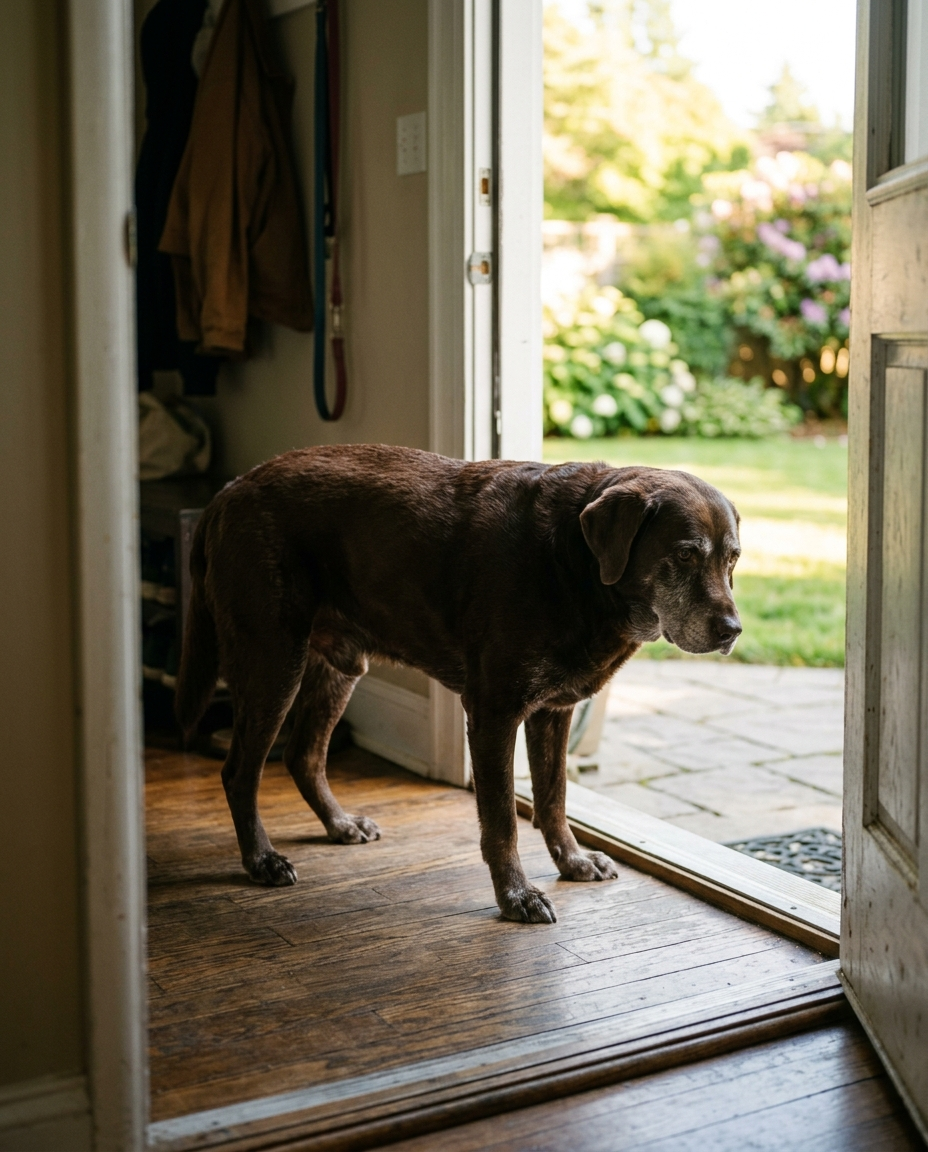
An older chocolate Labrador standing in a doorway, looking out with a tired expression

I understand why owners do this.

"It's just age" is easier to sit with than "something is wrong with my best friend."

But old age isn't a diagnosis. It's a label we put on a process we haven't looked at closely. The slowing down, the stiffness, the hesitation at the stairs — that isn't a clock you can't fight. It's a physical condition. And every week it gets written off as "just getting older," it quietly advances, and your dog loses good days you don't get back.

"It's not 'normal' to be limping at any age. He's not old. He's hurting. There's a difference."

— Verified owner review
The Second Mistake

Assuming you've already tried everything.

Maybe you've been here before. You bought a joint supplement. Your dog spit it out, or ate it for a month with no change, and you concluded the whole category is snake oil.

You're not wrong to be skeptical. You're wrong about why it failed. Owner after owner describes the same thing: "It won't work if the dog won't eat it." "I crushed the Cosequin into food, but my dogs showed no improvement." "Used to change my dog's life — now it barely does anything."

The Five Signs

The five signs most owners miss

Not the obvious limp — by the time that's constant, you're already late. These are the quiet, early tells.

  1. The pause before the jump

    He still gets on the couch or into the car — but now there's a half-second hesitation first, like he's bracing. "She just didn't want to lift her leg to jump, as if she knew it would hurt." Dogs don't hesitate before something that feels good. They hesitate before something that's started to hurt.

  2. "Walking off" the morning stiffness

    He's stiff getting up, then loosens after a few minutes of moving, so you assume it's nothing. That "walking it off" is the joint warming through inflammation — one of the very first signs, long before any limp shows.

  3. The slow fade after walks

    He keeps up on the walk, but he's flat the rest of the evening, or stiff when he lies down. "After long walks his knee gets sore, and when he sleeps his leg is stiff for a few minutes." The activity isn't the problem — the recovery is quietly getting longer.

  4. Favoring one side

    A subtle shift of weight off a back leg. A bunny-hop when he runs, both back legs together, because pushing off one at a time hurts. "He still wags his tail and plays, but he favors his back left leg." Owners see it and assume it's a quirk. It's usually the joint.

  5. The activities he's quietly stopped doing

    The most-missed sign of all — because it's an absence, not an event. He used to bring the ball. He used to do zoomies in the yard. He used to race you to the door. Slowly, he just… stopped. You didn't notice the day it happened, because there wasn't one. It faded.

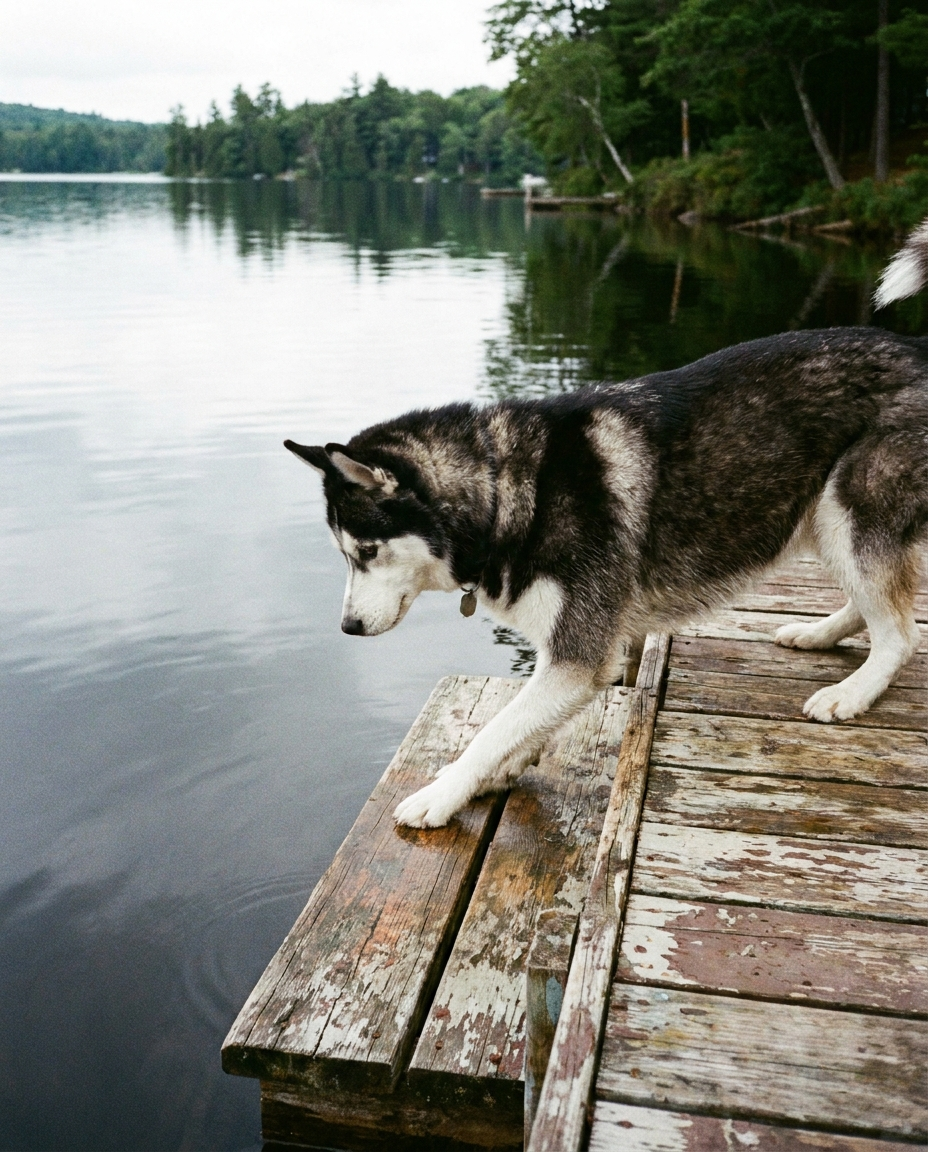
A husky standing at the edge of a dock, looking down at the water but not jumping in
He usually loves the water, sadly the pain keeps him from jumping in.

Any one of these on its own might be nothing. But two or three together usually mean the breakdown is already underway — and it's the kind of thing that's far easier to get ahead of early than to claw back late.

The real question isn't whether your dog is "old." It's whether your dog is showing enough of these signs right now that you'd want to do something about it — and most owners genuinely can't tell where their dog falls until they see it laid out. More good years are usually still on the table. You just have to know where you're starting from.

30 SECOND ASSESSMENT

Where does your dog actually stand?

Answer a few quick questions about what you've been noticing. You'll see whether he's in the clear, in the early stage where this is easiest to turn around, or further along than you'd realized.

Free · No email required to see your result