There's a specific, physical reason dogs stop moving the way they used to, and it has almost nothing to do with age itself.

Reviewed Thoroughly by Melissa Burke, Veterinarian - Nutritional Specialist
June 2026·2 min read
 DogWell Health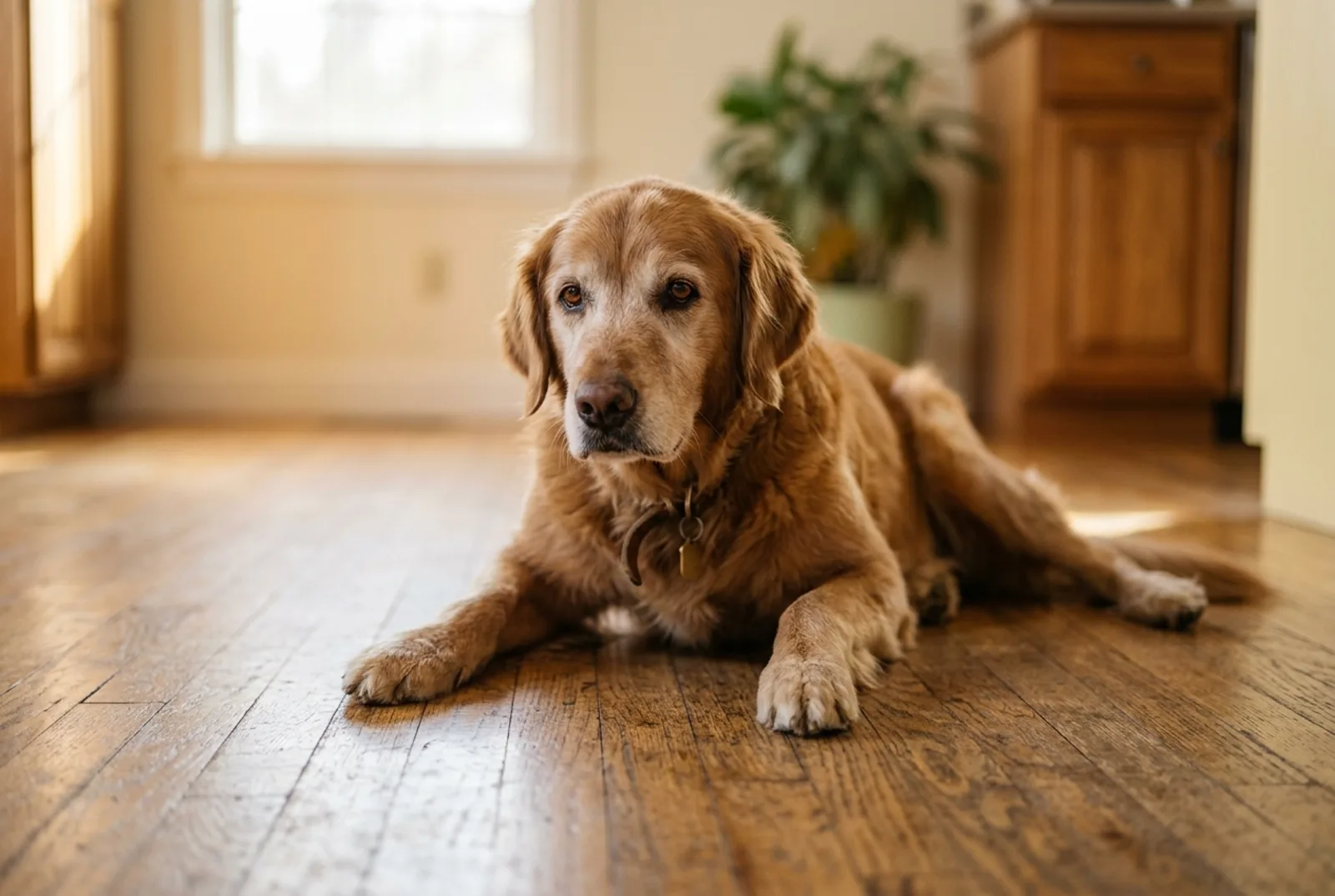
There's a specific, physical reason dogs stop moving the way they used to, and it has almost nothing to do with age itself.
Istill call him a puppy. I don't even think about it, it just comes out. "Come on, puppy." "Good boy, puppy." He's seven. He hasn't been a puppy in years. But somewhere in my head, he still is.
Then last week I watched him try to get up off the kitchen floor, and it took him three tries.
"Three. I counted, because I didn't want to believe what I was seeing the first time."
He's still him, same eyes, same way he leans against my leg when I'm cooking, same excitement when the leash comes out. He's still my puppy in every way that matters.
He just doesn't move like one anymore.
And here's the thing nobody tells you: that's not the same as getting old. I used to think it was, that this was just what happens, that you can't fight time, that "he's getting older" was the whole explanation. It isn't. There's a specific, physical reason dogs stop moving the way they used to, and it has almost nothing to do with age itself.
I found out later it's not one thing. It's three.
The cushion between the bones has been quietly wearing thin.
What used to keep everything moving smoothly has started to dry up.
Once that happens, it hurts, so he moves less, and moving less makes it worse.
None of that shows up as a single dramatic moment. It shows up as three tries to stand up instead of one. As a pause at the bottom of the stairs. As a walk that ends a little sooner than it used to.
By the time you notice it, really notice it, you're usually further along than you think. Not because you weren't paying attention. Because the changes are small enough, for long enough, that "he's just getting older" is the easiest thing to tell yourself.
I'd given him a joint supplement before this, one of the popular ones from the pet store. It didn't do much, and I figured that meant nothing would.
Turns out that's not quite right. Most of what's on the shelf only addresses one piece of that three part breakdown. Something for the cartilage, maybe. Nothing for the dried out joint fluid or the inflammation cycle underneath it. So the dog still hurts, still moves less, and the owner assumes the whole category doesn't work.
It's not that joint support is snake oil. It's that most of it is incomplete.
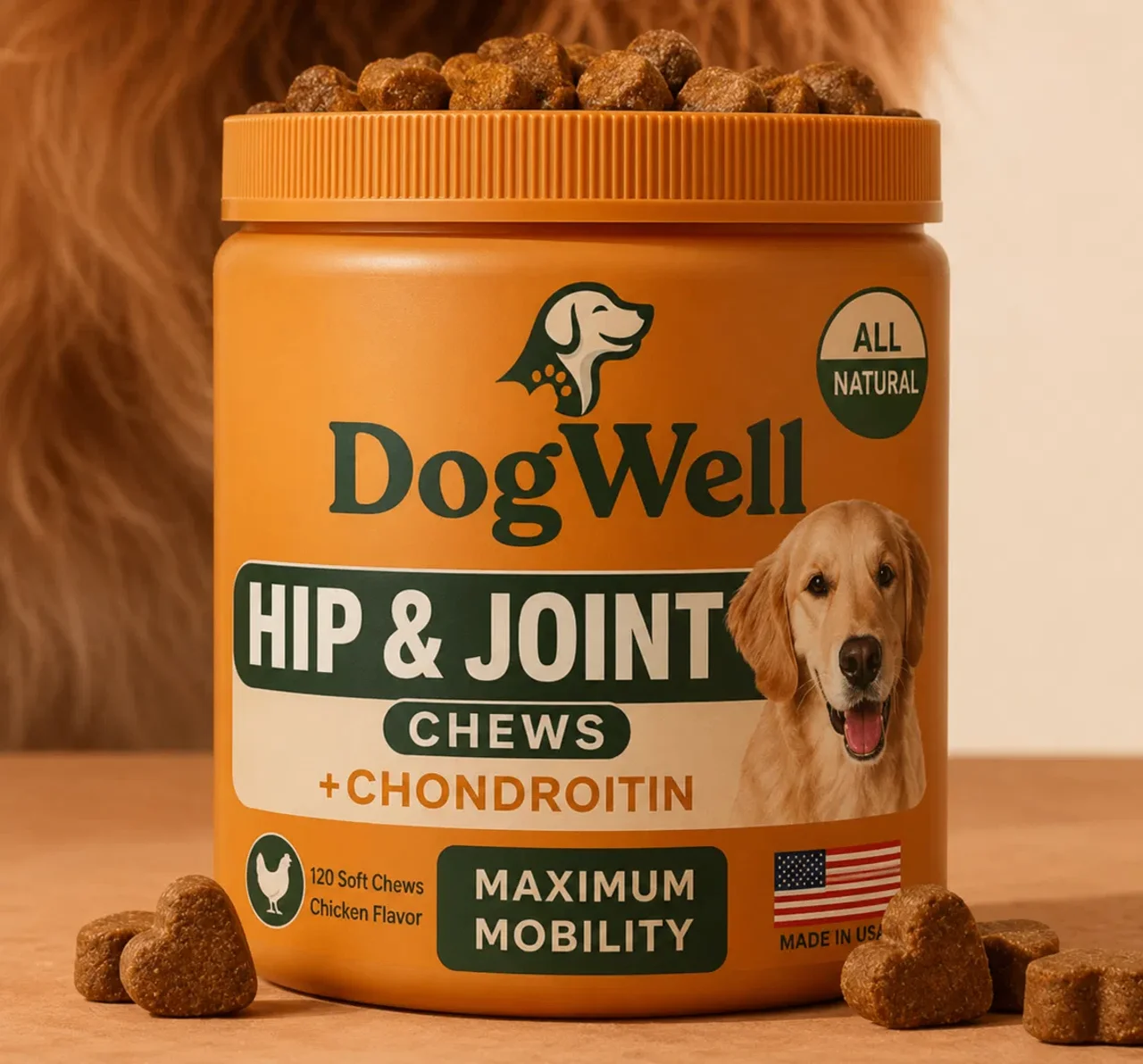
This is where I found DogWell Hip & Joint Bites. What made me pay attention wasn't a flashy claim, it was that the formula was built around all three parts of the breakdown at once instead of just one.
Glucosamine and chondroitin to help support and replenish the cartilage cushion. Green lipped mussel and hyaluronic acid to help re-lubricate the joint itself, the same ingredient working dog handlers have quietly relied on for years to keep hard running dogs sound longer. Hemp seed oil and MSM to help calm the inflammation cycle that keeps the whole thing locked in place.
And because none of it matters if the dog won't eat it, it's a soft chew he actually wants, not something I have to hide in his food and hope he doesn't notice.
I'm not going to tell you it's magic. What I'm hoping for is what other owners describe: the limping easing up, the hesitation at the stairs disappearing, a dog who moves through the day like himself again instead of carefully working around the pain. "More good years" is the phrase that keeps showing up, and it's the phrase I'm holding onto too.
If your dog is doing some version of what mine did, standing a little longer than usual, resting a little more, taking the stairs a little more carefully, it might be time to stop calling it age and start asking what's actually going on underneath it.
Backed by a 60 day money back guarantee. If it doesn't make a real difference for your dog, you're not out anything.
The only real risk is waiting another few months telling yourself it's nothing.
Give Them More Years
See what's actually behind the slowdown, and the daily chew built to help with all three parts of it.
P.S. The hardest part isn't deciding whether to try something. It's admitting something has changed. If you've already had that moment, you already know.
Answer a few quick questions about what you've been noticing. You'll see whether he's in the clear, in the early stage where this is easiest to turn around, or further along than you'd realized.
Free · No email required to see your result